
Services
Best Heart / ECG Testing Lab In Mira Road
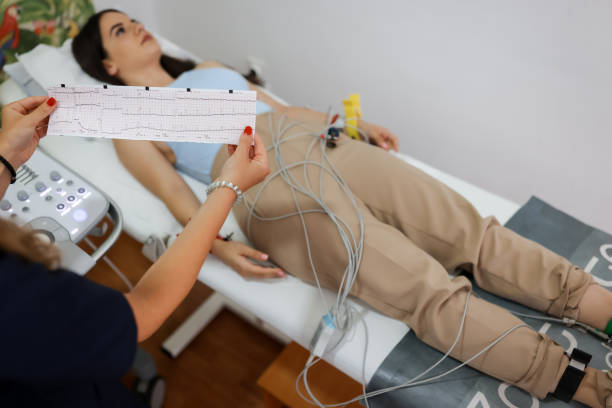
What is an ECG Test?
Your heart's Best Heart / ECG Testing Lab In Mira Road electrical activity can be measured using an easy, non-invasive test called an electrocardiogram (ECG). It aids in the diagnosis of a number of cardiac disorders, including arrhythmias, heart attacks, and other issues.
Symptoms:
You might get an ECG test from your doctor because you have:
- • Chest pain.
- • Shortness of breath.
- • Tiredness
- • Dizziness
- • A flutter or skip in your heartbeat.
- • A fast heartbeat.
1. How Do You Conduct an ECG Test :
- • Getting ready you could be requested to don a medical gown and take off all of your clothing from the waist up.
- • Your arms, legs, and chest are covered with electrodes, which are tiny, sticky patches.
- • Lead wires link these electrodes to an ECG machine.
2. During the Test:
- • You will be asked to lie still and breathe normally.
- • The ECG machine typically records your heart's electrical signals for a few minutes.
- • The test won't cause you any discomfort.
3. After the Test :
- • The lead wires and electrodes are taken out.
- • You can put on your clothes and carry on with your daily routine.
- • A cardiologist usually interprets the results.
Types ECG Test
1. Resting ECG:
- • Conducted in a supine position.
- • Used to evaluate resting cardiac activity.
2. Exercise ECG (Stress Test):
- • Performed while working out on a stationary bike or treadmill.
- • Evaluates your heart's response to stress.
3. Holter Monitoring:
- • To continually track cardiac activity, a portable device is worn for 24 to 48 hours.
- • Aids in identifying erratic heartbeats that would go undetected by a routine ECG.
At what point is an ECG test advised?
- • Diffuse or pain in the chest
- • Inconsistent heartbeats or palpitations
- • Breathlessness
- • Lightheadedness or episodes of fainting
- • Regular examinations for heart health
